Monday, September 20, 2010

Same old song, different year

In the news today there's a flood of articles about flu shots reducing heart attacks.   I've yet to find the original study but the news indicated British researchers reviewed charts and found a 21% decrease in the rate of heart attacks in people over 40 if they got the flu shot between september and mid november and a 12% decrease if they got the shot later in the year.  

This isn't new.  Last September stories like this were published 


Before that there have been studies showing a 50% to 90% decrease in mortality in elderly people who received the flu shot.  

All of these studies suffer from what's called "selection bias".   People who choose to get the vaccine,  especially elderly people, are more likely to seek medical care for their chronic conditions like high blood pressure or heart disease.   Influenza doesn't account for more than 5% of deaths in the elderly and yet the shot somehow lowers mortality 50% or more?   Additionally some of these studies found the "benefits" growing the following summer after the shot and flu season were long gone.   

The theory that reducing the stress of the viral infection,  influenza, will prevent heart attacks makes sense to me but it is equally reasonable that the myriad other viral infections that replace it (in the minority of vaccination recipients who do benefit) will stress the system just as much if not more.   Influenza unlike a few other respiratory viruses isn't known to directly infect the heart muscle for example.  

It's flu season and the stories touting benefits to vaccination are coming out of the woodwork again.  


Here's a good summary of what we know about influenza from vaccinations to antiviral drugs.

This one specifically talks about the misleading results on mortality

gotta hit play on that one

So when you hear the flu shot prevents heart attacks say "that's selection bias bubba".  

Thursday, September 16, 2010

Blame Manichanh

My PA friend sent me this article from one of them PA magazines
http://www.jaapa.com/pneumococcal-disease-swinging-away-at-a-dangerous-killer/article/177825/?DCMP=EMC-JAAPA_Perspectives

It got me all riled up and my comment ended up being a pretty good overview of several vaccines so I gotta save it here.   You can stop reading now if you're not ready to spend like an hour thinking about this mess.


Are you serious?   How about instead of reading CDC reports and recommendations and parroting them to PAs,  we look at the actual clinical trials and quantify the benefits and risk of the vaccines you covered?  


PCV-7:  The 2 prelicensure trials show a decrease in IPD which becomes less pronounced over the short 3 year span of the studies.  There is a marked serotype replacement phenomenon that continues to be studied to this day.   PCV-7 was just mentioned in a JAMA article which reported a RCT showing serotype replacement with 19A nearly twice as often compared to unvaccinated controls.   Additionally there is zero mortality benefit demonstrated in any PCV7 clinical trial and the pneumonia benefits don't reach statistical significance unless the trial was outside of the US where attack rates are much higher.  
PCV7 isn't even recommended at this point with the new PCV13 taking its place.  There were no clinical trials used in the approval of PCV13 except for immunology studies which showed borderline responses for 3 of the 13 serotypes by the by.  


http://tinyurl.com/ybnc3xp  


http://www.ncbi.nlm.nih.gov/pubmed/17456820


http://www.news-medical.net/news/20100224/FDA-approves-Wyeth-Pharmaceuticals-Prevnar-13-pneumococcal-disease-vaccine.aspx


http://jama.ama-assn.org/cgi/content/abstract/304/10/1099?maxtoshow=&hits=10&RESULTFORMAT=&fulltext=pneumococcal&searchid=1&FIRSTINDEX=0&resourcetype=HWCIT


Routine influenza vaccination was summarized so well by Cochrane that I've nothing to add:
http://www2.cochrane.org/reviews/en/ab004876.html (in the eldery)


http://www2.cochrane.org/reviews/en/ab005187.html (health care workers)


http://www2.cochrane.org/reviews/en/ab000364.html ( patients with asthma)


http://www.digitaljournal.com/article/288946 (swine flu and routine influenza vaccination) 


Why would you recommend routine influenza vaccine?  Is it because the CDC recommends it?  That is NOT evidenced based medicine.  It's expert opinion based medicine.  


As for adult vaccination with PPV23:   The results are underwhelming 


http://www2.cochrane.org/reviews/en/ab000422.html


I do like the baseball analogy.   PAs are like the designated hitter in the majors.  They're paid less but reap huge rewards for the team.  I agree it's time for the PAs to "step up to the plate" but only metaphorically speaking.   It is time for PAs to join their brothers and sisters watching the GAME from the stands.  It is they who pay your salary and it is they who you are duty bound to advocate for.   Stop playing the GAME and start examining the men behind the curtain.  

Monday, August 30, 2010

Good News, Cancer Rates and Health Care Costs Decreasing

http://www.kaiserhealthnews.org/Daily-Reports/2010/August/30/Medical-Imaging.aspx


"Part of the explosion in medical imaging over the past two decades may be attributable to overuse, and steps need to be taken to cut back," according to a study in the journal Radiology, MedPage Today/ABC News reports.
"Initiatives include rewriting the fee-for-service system, curbing physician self-referral practices, and creating appropriateness criteria for imaging, according to William R. Hendee of the Medical College of Wisconsin in Milwaukee and colleagues. … Imaging services and their costs have grown at about twice the rate of other technologies in healthcare including lab procedures and pharmaceuticals, Hendee and colleagues wrote." Overuse of imaging "also exposes the public to unnecessary radiation." The authors "called for a national effort to develop evidence-based appropriateness criteria for imaging, so that physicians can make greater use of practice guidelines in requesting and conducting imaging studies" (Fiore, 8/29).
This is part of Kaiser Health News' Daily Report - a summary of health policy coverage from more than 300 news organizations. The full summary of the day's news can be found here and you can sign up for e-mail subscriptions to the Daily Report here. In addition, our staff of reporters and correspondents file original stories each day, which you can find on our home page.


http://www.kaiserhealthnews.org/Stories/2010/August/23/imaging-tests-health-risks-sidebar.aspx?utm_source=feedburner&utm_medium=feed&utm_campaign=Feed%3A+khn%2Ffulltext+%28All+Kaiser+Health+News+%28Full+Text%29%29


Several recent studies show the risk of cancer associated with CT scans appears to be greater than previously believed.
A study published last year in the Archives of Internal Medicine projected that 29,000 future cancers will be directly attributable to the 57 million CT scans performed in the United States in 2007.
Another study last year by the National Council on Radiation Protection and Measurements found medical imaging was responsible for about half the total radiation exposure to the typical U.S. resident, up from just 20 percent in the 1980s. The council was chartered by Congress to recommend ways to limit radiation exposure.
A 2007 study published in The New England Journal of Medicine estimated that 0.4 percent of all cancers in the country may be attributable to the radiation from CT studies. By adjusting this estimate for current CT use, this estimate might now be as high as 2 percent.
"By definition, an unnecessary exam that uses radiation, such as a CT scan, is an unnecessary exposure to radiation and, in self-referring facilities, perhaps an inordinately high radiation dose since many of them are not properly accredited," said John Patti, chairman of the American College of Radiology’s board of chancellors.


-------------------


To have something in the journal Radiology that calls for evidence-based guidelines for when to order a CT.......  Leaves me speechless.

This combined with the decreases in screening mammograms will decrease cancer rates noticeably and cut a major source of revenue for hospitals and specialists.   Health care expenditures are going to decrease because of this.   That's not good news for the larger institutions' bottom line.  

So let's summarize:

Less cancer + less expensive health care =  financial hardship for radiologists,  oncologists and hospitals

That's a recipe for disaster,  having the incentives between patients and institutions clash so completely.


Let's see if I find a copy of the journal articles themselves.

Wednesday, July 7, 2010

Happy Birthday to Me

Yummy, Yummy, Yummy


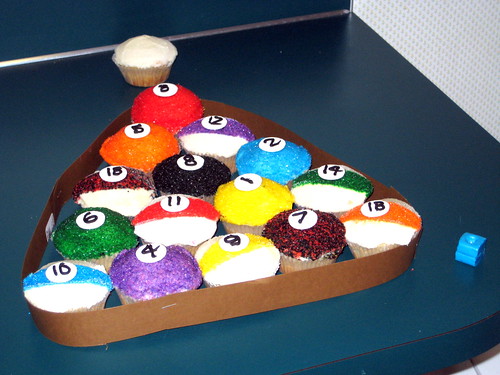
So way back on May 8th I got this cake in the mail.   My artist friend from Bellingham makes treats and sends them through the mail.  


She actually designed her own little business around it on flickr.  
Chocolate with espresso-cream cheese frosting

Strawberry shortcake cupcakes with cream cheese frosting


White cupcakes with vanilla butter cream and sugar sprinkles


She also takes incredible pictures which end up in the northwest newspapers.


So if you want custom made confectioneries just let Juline know.


http://www.flickr.com/photos/julescakewalk


And her pictures are here http://www.flickr.com/photos/julineb/


But most importantly,   those of you with flickr accounts (and you automatically have one if you have aYahoo mail account)  please favorite this picture of the cake and/or comment on it.


http://www.flickr.com/photos/julineb/4580632440/in/set-72157622526233311/


It's for a good cause.   

Friday, June 11, 2010

Just in time for summer

http://www.cnn.com/2010/TECH/innovation/06/09/technology.prize.window/index.html?hpt=Sbin

A professor who invented low-cost solar cells that may be incorporated into energy-producing windows has been awarded the Millennium Technology Prize.

Monday, June 7, 2010

Overtreatment in the news

http://news.yahoo.com/s/ap/20100607/ap_on_bi_ge/us_med_overtreated

Overtreatment means someone could have fared as well or better with a lesser test or therapy, or maybe even none at all. Avoiding it is less about knowing when to say no, than knowing when to say, "Wait, doc, I need more information!"


It's great this is in the news but again the way overtreatment is framed leaves people without a clear picture of the harms.  They do mention a risk of cancer with excessive CT scans but they refer only to the "limitations" of PSA screening.   They don't mention the harms of screening mammograms at all.  They don't mention the blockbuster (expensive) vaccines gardasil and prevnar which have more evidence of harm than benefit.  


They mention a couple medications which are overprescribed such as Nexium and antibiotics but they again leave the magnitude of harm vague.  


It's interesting to watch the system attempt to retreat slightly and reduce the overtreatment burden slightly with guidelines and payment incentives for physicians to counsel more and test/over treat less.  


Amend and reform,  amend and reform.   


But what if the core of the system is rotten?  


What if the fundamentals of health care incentivize overtreatment?  How are some guidelines going to counteract the massive marketing power of pharmaceutical companies?  


See it's times like these that "lip stick on a pig" would be appropriate but our friend Sarah P ruined that gem for us all.   


Oh well.  


But this article does sample a pretty large chunk of the super-sized american health care experience.  It's a superficial view of the harms from all this over testing, over treating.   It doesn't make the connection between overtreatment and marketing.  It doesn't make the connection between over everything and lack of coverage via high costs.  


It doesn't talk about how overtreatment and over testing are the same things as economic growth in the so called health care industry.  


IF


IF we somehow reverse this trend toward more and more unnecessary/harmful health care,  then what will it do to the economy?  I mean other than the military and other government spending, health care has been one of the few consistent sources of economic growth.   Do we really have a system that punishes society with yet another bursting bubble (dot com followed by housing followed now by health care) because society finally figures out that more is less?


Because as we break this mindless cycle of excessive treatment and testing and reduce the harms that go with it all,  some mighty powerful industries will be forced to shrink and good, hardworking people will be out of a job.   


The stuff about low back pain in the article reminds me of a local phenomenon.   Here in Yakima one of the few highly lucrative health care institutions is the pain clinic.   The pain clinic functions as a kind of deep injection factory.  Nerve blocks,  epidurals,  spinals.  These deep injections often under xray guidance pay very well.  The benefits are almost always short-lived and the potential harms remain vague in most minds but the financial incentives to do more tests and more procedures are painfully evident at the pain clinic.  


And now that the ER has a fancy new MRI scanner,  there's even more opportunity to find common disc abnormalities that can be harvested at the pain clinic.  


But almost all of their business at the pain clinic is discretionary spending.  Most of the patients walking in their doors will either get better on their own and/or not benefit from the procedures preformed.  


It's not that we don't need specialists who can do nerve blocks well.   It's just that the incentive to do more procedures,  advertise and repeat runs counter to the best interests of the average patient in pain.  


Put another way:   If most people with low back pain will get better just as rapidly with certain treatments as without,  then most people are harmed in some fashion by said treatments. 


It's pretty grotesque but almost every popular AKA lucrative treatment and test in medicine is over applied.  It just makes sense,  if you limit interventions to just the people who need them, you are missing out on a larger market.   The goal, financially, of any medical intervention is to apply something studied in a limited population of patients to the general population.  


Like with acid blockers like Nexium.   If it works well in people with ulcers then focus on the symptoms that are most common in the general population and get people used to treating the symptoms.   There are thousands of times more potential customers who have occasional heartburn versus the rare individual with stomach ulcers.  


Interesting times  


Saturday, June 5, 2010

Stress

http://www.yesmagazine.org/happiness/want-the-good-life-your-neighbors-need-it-too

....It's not the inferior housing that gives you heart disease, it's the stress, the hopelessness, the anxiety, the depression you feel around that. The psychosocial effects of inequality affect the quality of human relationships. Because we are social beings, it's the social environment and social relationships that are the most important stressors. For individuals, of course, if you're going to lose your home, or if you're terribly in debt, those can be more powerful stressors. But amongst the population as a whole, it looks as if these social factors are the biggest stressors because so many people are exposed to them.


...


If you grow up in an unequal society, your actual experience of human relationships is different. Your idea of human nature changes. If you grow up in a consumerist society, you think of human beings as self-interested. In fact, consumerism is so powerful because we're so highly social. It's not that we actually have an overwhelming desire to accumulate property, it's that we're concerned with how we're seen all the time. So actually, we're misunderstanding consumerism. It's not material self-interest, it's that we're so sensitive. We experience ourselves through each other's eyes—and that's the reason for the labels and the clothes and the cars.


.....


The gift in a sense is a symbol that you and I don't compete for the necessities of life. We don't need to fight each other for them. You feel a sense of indebtedness and you reciprocate the gift, which anthropologists have suggested is a sort of basic social contract. That symbolism is still really important: You invite your friends over, sit around the same table, and share food, the basic necessity of life. The symbolism is also there in religious services and communion—these things are very fundamental, very deep.
Inequality is a reflection of how strong hierarchies are, how much we share or how much we don't. It shows us which part of our potential we're developing. What game do I play? Have I got to fend for myself? Or have I got to get people to trust me and cooperate with me? Is my survival dependent on good relationships? Are you my rival? Are you going to steal from me? Have I got to keep what I've got, defend it? Or can we share? Human beings can do both. We've lived in the most egalitarian and the most awful, hierarchical, tyrannical societies. It's very interesting that we can measure how unequal societies are and how that can elicit more of certain kinds of behavior.